Monday, December 2, 2013

Circle Mêtis


Enzo
Circle of Reality in Japanese Zen Art


Mêtis is the particular quality of intense alertness that can be effortlessly aware of everything at once. While our wandering minds go off on their endless journeys, it always stays at home. And its home is everywhere. Mêtis feels, listens, watches; can even be aware at the same time, if left to itself, of every thought drifting into and out of our consciousness. It misses nothing.

This is how the circle begins.

When we really become aware of the sights and sounds and other impressions coming from all around us, after a while there is no longer the sense of just hearing and seeing this or that: instead, there is the awareness of everything as forming a single whole. Everything is exactly what it is, and always has been — but as a continuity now, all together, without any separation or division. And in this wholeness even the past and future start to merge until they are no longer separate. For they are both included in the now.
Then even the sense of any motion disappears. Mêtis is so fast in its response, so rapid in its alertness to the moment, that any movement is only perceived as stillness. But, by now, instead of just perceiving a tree or a chair you have become aware that you are perceiving one single being: whole, unmoving, quite still. 
And eventually, if you look, you will discover that instead of you perceiving reality, what in fact is happening is that reality is perceiving itself through you.

This is how the circle ends. 

And you may not be surprised that one of the symbols of mêtis is a circle. Mêtis is the encircler; the completer of the circle; the awareness that allows us at any moment, in spite of the ranging torrent of appearances,  to connect the beginning to the end.


(...) But really there is nothing at all to understand. For even to try to understand something is to step out of the one reality surrounding you in every direction and to separate yourself from it. These words are no different from any other shapes and sounds around you, with only one exception.
They are different in reminding you they are no different.
(Reality, pp.186–187, Peter Kingsley)

Such a quality of reality is not something complicated or otherworldly. On the contrary, it acts all over the universe, evidenced in the way stars and planets revolve effortlessly, in how the fish swim togeher in shoals, in how birds fly using the air currents, in how humans perform unbelievable feats,  dodging mortal blows, singing like angels, transforming negative emotions into positive on the spot, including rather than excluding, co-creating rather than destroying, finding the pathless path to the serene stillness around which all spins.

Friday, November 15, 2013

Mêtis & The Inner Cyclops


Odysseus in Polyphemus' Cave (Jacob Jordaens, 1635)

Following the thread of the previous posts, we delve  now into the famous, terrifying and humorous passage in the Book IX of Homer´s Oddyssey, where the sly Odysseus finds himself trapped with his crew inside a cave, where a Cyclops, one-eyed giant, starts devouring them mercilessly. And before we examine its meaning, let´s refresh it briefly:
We made a pleasant meal of wild goat, then next day I left everyone else behind and took my own crew over to the mainland. The first thing we saw was a big cave overlooking the beach. Inside were milking pens for goats and big cheeses aging on racks.
My men were for making off with the cheeses and the lambs that we found in the cave, but I wanted to see what manner of being made this his lair.
When the Cyclops –Polyphemus was his name– came home that afternoon, he blotted out the light in the doorway. He was as tall and rugged as an alp. One huge eye glared out of the center of his forehead.
He didn't see us at first, but went about his business. The first thing he did was drag a huge boulder into the mouth of the cave. Twenty teams of horses couldn't have budged it. Then he milked his ewes, separating out the curds and setting the whey aside to drink with his dinner. It was when he stoked his fire for the meal that he saw us.
'Who are you?' asked a voice like thunder.
'We are Greeks, blown off course on our way home from Troy,' I explained. 'We assume you'll extend hospitality or suffer the wrath of Zeus, protector of guests.'
'Zeus? We Cyclopes are stronger than Zeus. I'll show you hospitality.'
With that he snatched up two of my men and bashed their brains out on the floor. Then he ate them raw, picking them apart and poking them in his mouth, bones and guts and all.
We cried aloud to Zeus, for all the good it did our comrades. The Cyclops washed them down with great slurps of milk, smacked his lips in satisfaction and went to sleep. My hand was on my sword, eager to stab some vital spot. But I realized that only he could unstopper the mouth of the cave.
We passed a miserable night and then watched the Cyclops make breakfast of two more of our companions. When he went out to pasture his flock, he pulled the boulder closed behind him.
It was up to me to make a plan. I found a tree trunk that the Cyclops intended for a walking stick. We cut off a six-foot section, skinned it, put a sharp point on one end and hardened it in the fire. Then we hid it under a pile of manure.
When the Cyclops came home and made his usual meal, I spoke to him. 'Cyclops, you might as well take some of our liquor to savor with your barbarous feast.'
I'd brought along a skin of wine that we'd been given as a gift. It was so strong that we usually diluted it in water twenty to one. The Cyclops tossed it back and then demanded more.
'I like you, Greek,' he said. 'I'm going to do you a favor. What's your name?'
'My name is Nobody,' I told him. [1]
It turned out that the favor he intended was to eat me last. But when the wine had knocked him out, I put my plan into effect. Heating the end of the pole until it was glowing red, we ran it toward the Cyclops like a battering ram, aiming it for his eye and driving it deep. The thing sizzled like hot metal dropped in water while I twisted it like an auger.
Polyphemus came awake with a roar, tore the spike from his eye and began groping for us in his blindness. His screams of frustration and rage brought the neighboring Cyclopes to the mouth of the cave.
'What is it, brother?' they called inside. 'Is someone harming you?'
'It's Nobody!' bellowed Polyphemus.
'Then for the love of Poseidon pipe down in there!'
They went away, and Polyphemus heaved the boulder aside and spent the night by the open door, hoping we'd be stupid enough to try to sneak past him. Getting past him was the problem alright, but by morning I'd worked out a solution...

What does the "one eyed" Cyclops represents in ourselves? Aren´t there within us selfish impulses, mono-directional views, that devour all divine trace in our hearts, thwarting every possibility of evolving, of escaping the sublunar spheres? 

And what about Odysseus and his trickery?
To make the subject even more interesting, we may have a look at something Peter Kingsley unveils nicely in the work Reality
In front of the monster, he  introduces himself as Outis: Nobody. [...]
This is the point where the real  jokes begin –as Homer draws out through word-play after word-play all the ambiguities stretching from Outis through ou tis and mê tis, which in Greek are alternative forms for nobody, to mêtis.
As Odysseus laughingly comments about the episode, well after the events have taken place, it was his mêtis that allowed him to blind the monster because it allowed him to be nobody: ou tis, mê tis. 
(...)  from the time of the Odyssey onwards, mêtis would always be associated in the minds of Greeks with this particular episode; with this notorious play on words ou tis and mê tis. (Ibid p. 226)

Friday, November 1, 2013

Unconditioned Meditation – Part III


Many are the Oriental terms that in the West would be translated as “meditation”. We already saw a few and keep now searching for a deeper understanding of what “unconditioned meditation” might be. 
Certainly, in the East there are brilliant visions. Nevertheless, one does not need to look towards the Orient to find jewels. It is nowadays of paramount importance to connect with something that was lost, or should we say, remained dormant in the West, until the right time. 
Westerners should remember that a living Wisdom was once strongly present in Ancient Greece. Not the classical Greece of Plato and Aristotle, but an older one, covered by mists of confusion. 
By means of poems and riddles wise men of Hellas passed down an ancestral tradition whose central root is the flowering of a mindful Intelligence that unveils a stillness and infinite purity, a vastness behind the veil of moving forms. 

And given the allegoric nature of ancient thinking, such a gift of Intelligence was personified by Mêtis, goddess of counsel, craft and slyness, which propitiates the birth of Athena (Intelligence), from the head of Zeus, with as represented in the picture below.
Today this seem to us a complicated pagan riddle. Yet the research of Peter Kingsley came to shed light on it, showing how teachers like Empedocles were already hinting at the fact that the Mind of Light –personified as Mêtis, goddess of counsel– is the only way of living lucidly through the great Deception [1].


The key message of such an ancient Greek tradition is that never delusion makes more sense than when Mêtis is active. 
But let's avoid simplistic definitions of Mêtis and Mind –which, by the way, neurologists naïvely reduce to a brain function, without realizing that the brain cannot perceive itself. 

The mind discovered the structure of the atom, so the mind is more subtle than the atom –Ramana Maharshi.

And Intelligence is more subtle than the thinking mind, for it can unveil all its trickery.

In Empedocles poems it simply manifests as a divine intelligence that grows like a tree or a flower, feeding on the completeness of the present moment. Echoing his own words:
For humans, 
mêtis grows 
in relation to what is present [2] 
In this ancestral teaching, one does not despise the senses, as if they were the source of sinful delusions; on the contrary, the five senses are a gate leading to the intelligence or common sense that links them all, carrying one beyond distorted imagination.
Yet, warnings were also given, for the art of light-intelligence is not a path to be considered too lightly. She has its own power and can't be manipulated. A great paradox is that one can´t simply “decide” to contact such Light or “try to practice the art of intelligence" , for that is precisely a road of self-deception. Light is spontaneous, choiceless, or it is not at all.
There is only one thing in our hands, and that is attention to everything perceptible in the mind and senses: breath, heart pulse, sounds, the act of listening itself...letting mindful Intelligence work through oneself, unmasking hidden memories, emotions, impulses, false perceptions, not unlike insightful watchfulness of the Buddha.

It can emerge when we watch a feeling, listen to the wind, notice a sudden insight or a drop of water with all our heart, leaving the chatty mind behind.

And this act of allowing and illumining is really a high form of loving service, since it frees us and others from suffering.
We don´t even have to look for a specific location; all places are good for “giving up” and listening-feeling.  All perceptions are actually necessary bring light upon them.

Light-Intelligence adapts itself constantly to the ever-changing circumstances of life, making use of everything at hand to see through delusion, leading our steps, without being asked or even noticed. 

Life is full of coincidences and traumas which are but “hints” to discover the presence of invisible Light. 
In this sense, meditation can be seen as “measuring”  all perceptions on the unconditioned and invisible background of the Light of the Soul, the point that connects us to everything and the One. 

After all, the emerging and apparently disconnected objects of our experience are simply ripples on the serene ocean of Being. 
Form is Emptiness and Emptiness is Form 
(Sutra of the Heart)
Finding stillness through movement is indeed another quality of true Light, but that is something one can´t pursue directly. The art of Light requires looking at oneself first. 
With attention one can see all the personal experiences that mould the limited views of life, but it is Light what connects them to a much larger background, the infinite land of what we really are. 
In the presence of invisible Light, our falls, our moments of frustation and sorrow, suddenly become meaningful threads in the tapestry of Reality. 
All this appears simple and beautiful. However, the human mind has become so conditioned by self-conconcted fantasies that it is extremely hard for it to feel the simplicity of a deeper nature for long. 

We make all too complex. And most of the time it is because we don´t remember we are far more than thinking heads, or simply because “we try too hard” to attain something that, by its own nature, is ungraspable and belongs to what we never ceassed to be.
As we see, Light represents many qualities at once: counsel, prudence, right attitude, lucid vision...

And its power is even more needed in these days where everything is mixed up and undiscerned, even spirituality. 
Fortunately, all end meets its beginning. Our civilization was born with the Art of Mindfulness, and now, amidst its decadence, a reconnection is demanded in true listeners that have the courage to step out of an uncivilised social mass
Despite modern thinking is no longer allegoric and symbolic, much can still be learned from myths about these teachings. For example, it is not a coincidence that Odysseus was deemed to be skillful in mêtis.  But we leave that for the next post.

To go deeper into this art, it might be useful the ancient practice of incubation, about which you have an article here:


Incubation, a Western form of meditation, published on Abril 6 2009:


Copyright 2013 ©
_______________
[1] Reality is a nice book where Peter Kingsley has reflected deeply on this issue
[2] Ibid, p.512. More verses of Empedocles can be found in the section Sacred Poetry.

Wednesday, October 16, 2013

Unconditioned Meditation – Part II

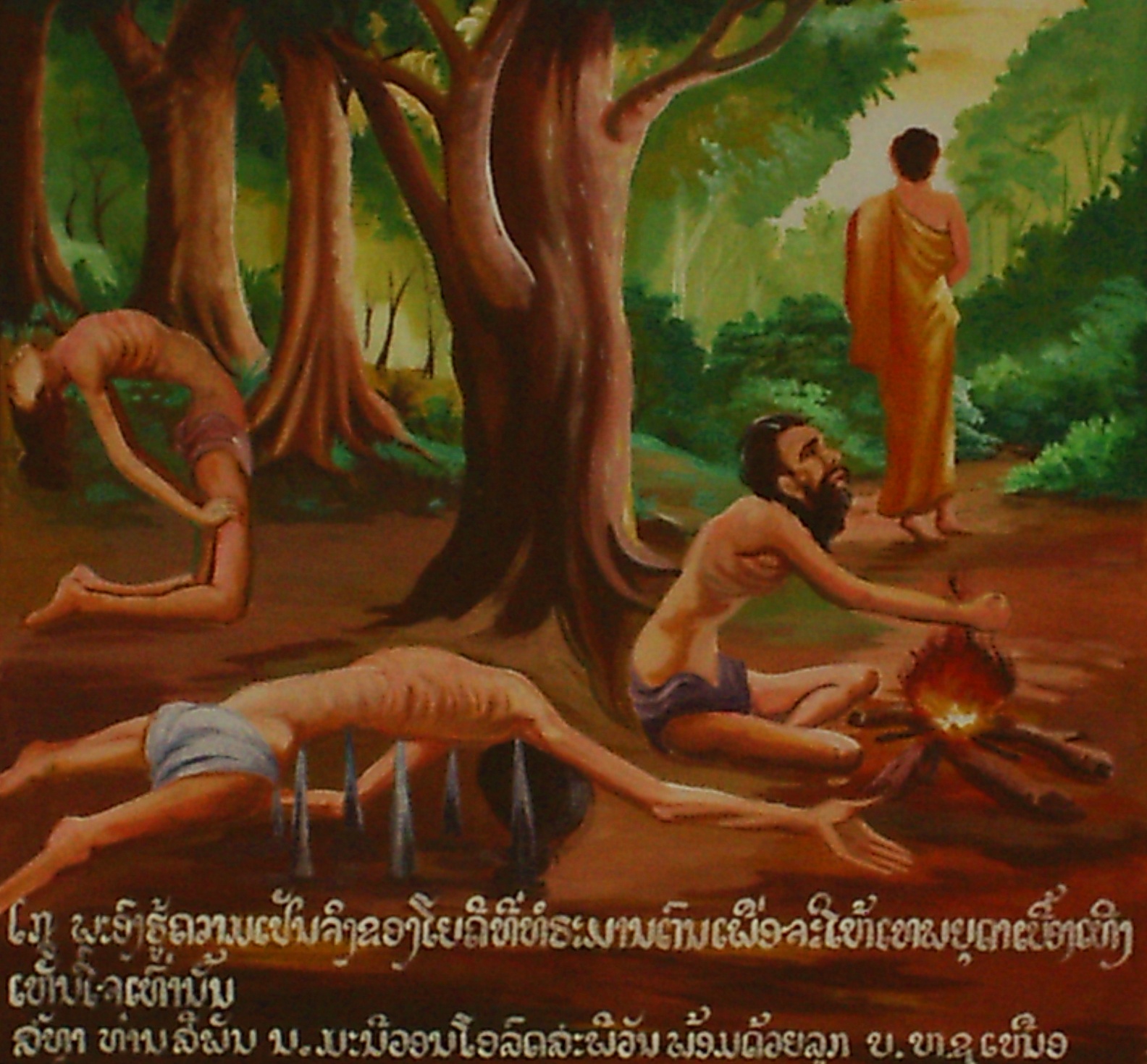
Buddha walking away from the ascets

Continuing with the subject of “meditation”, it is now time to consider some important implications of the term, since that word has been hijacked and it is used indiscriminately to speak of a variety of mental techniques, some of which can even work against the act of insightfulness.
The term meditation originally derived from meditatio, Latin concept for reflection; the verb meditari means in fact “to ponder”, “to reflect” [1]. Yet the root med, “to measure”, may help us recover an even older sense of meditation, as we will see.
The idea of meditation as a “discursive” process of thinking travelled from the ancient world through the Middle Ages and reached the XVIIth and XVIIIth centuries. The famous book Meditations of Descartes was precisely the starting point of a new intellectual paradigm: the Era of Reason.
Later on, with the proliferation of Oriental studies during the XIXth century, scholars started using the term to translate the Sanskrit word dhyana [2], the seventh limb of the eightfold path of Yoga [3]. The problem is that dhyana can´t be a mere discursive-conceptual thinking, for it surpasses such a level. 
On the other hand, in the tradition of Yoga, dhyana is preceded by the fifth limb, pratyahara, the withdrawal or absorption of the senses, traditionally compared to a turtle that hides itself inside its shell. 
Now, isn´t sensory deprivation in contradiction with the clues of the previous post?
Of course, we look for a radically different sense of “meditation” that helps us see ourselves and find our true nature, cutting through the veils of reality, using all our refined senses, distinguishing that which is false or apparent from what is absolutely real and undestructible; an intelligent movement of awareness that finds and identifies the “masks” that turn humans into zombis, tyrans and idiots. Once the insight takes place, one is really in the position to make life real, To Be. 
This does not mean concentrative and reflective meditation are useless. These can be helpful, despite they are not unconditioned, because they still depend on certain external conditions and psychological functions that are limited.

The Fathers of the Desert were well aware of this. They became true experts in different meditative methods, such as the Lord´s Prayer and the examination of "psychological obstacles", but their texts (i.e, Philokalia) always stress the importance  of feeling the "silent divine presence" in us, which dissolves all inner conflict, cleaning our heart. That is precisely "unconditioned meditation".
A similar investigation that is worth remembering is contained in the Canon Pali, collection of texts that gathers interpretations of the teaching of the Buddha. They offer clues to understand the mental tricks that enslave humans. The study involves supportive methods such as reflection on the five constituents of the mortal self (skhandas); the observation of body sensations, breath and psyche as well as the clear recognition of each sensation, emotion, thought and impulse, and its place in the whole. For beginners, such a recognition can even be supported conceptually, with the so-called “mental noting”, i.e, “anxiety”, “daydreaming”, “agitation”, "irritation", etc, always keeping an inquiring attitude. A practice that can really be exhausting, for it demands diligence and burning attention, reason why it has to be dosified. 
A text from the Pali Canon gives us a picture of  attention to the body [4]:
...when walking, the monk is aware that he is walking. When standing, he is aware that he is standing. When sitting, he is aware that he is sitting. When lying down, he is aware that he is lying down. Or however his body is disposed, that is how he perceives it. And as he remains thus heedful, ardent, & resolute, any memories & resolves related to the household life are abandoned, and with their abandoning his mind gathers & settles inwardly, grows unified & centered. This is how a monk develops mindfulness immersed in the body.
Furthermore, when going forward & returning, he makes himself fully alert; when looking toward & looking away...when bending & extending his limbs...when carrying his outer cloak, his upper robe & his bowl...when eating, drinking, chewing, & savoring...when urinating & defecating...when walking, standing, sitting, falling asleep, waking up, talking, & remaining silent, he makes himself fully alert. And as he remains thus heedful... 
And once again, great Buddhist teachers point out that what really matters in self-investigation are not the methods of attention themselves, but becoming open to an “insightful vision”, known as vipassanaUnfortunately, many practitioners still mistake it for the attention to body, mind and breath. 

Undoubtedly, that type of body attention is more productive than reciting mantras like parrots or fixing one´s attention on a candle, cross-eyed. Yet anyone can understand that concentration and attention turn into "self-hypnosis" if Intelligence is not present. This is why in the Dzogchen doctrine of Tibetan Buddhism specifies that meditation, gom, really means getting familiar with the true Nature of the Mind, not just with the little ego-mind.
A living meditation is truly integrated in our daily life and does not look for enlightenment or higher experiences; it helps us see ourselves as we really are, not as we think we are or as a tradition says we are. This can be painful, but also incredibly liberating, for we no longer have to hide anything and suffer from self-imposed lies. And thus the Infinite can fill our heart.
Hence radical and critic teachers like J.Krishnamurti regarded concentrative meditation as deceptive. Siddharta Gautama did exactly the same when diverting from Brahmanism.

The so-called sitting meditation is, in any case, a preparation to potentiate the muscle of attention and prolongue the exposure to purifying energies, both very necessary. But in order to become really free from delusions and fear, shouldn´t our vision be free from the beginning, rather than after a silent sitting? Which person sits? Which one stands up? Is there coherence in ourselves or we are Legion?
Having said this, we may ponder now on something curious about the root of the term meditation, “med”, to measure. What is measured in the act of insight? What takes place in a process of measuring? Isn´t there a relation between a vast spaciousness and smaller items emerging in it? How do we measure ourselves in a deeper sense?
This sounds perplexing, doesn´t it? Yet, we can really find something extremely significant. And it should be a link to the next post, in which we will hear about a forgotten art known by teachers of the Ancient Greece, a vision that stands firmly on itself, turning out to be the only pathless path to reality.
_________________
Image from commons.wikimedia.org
[2] “dhyana” derives from “dhyai”, “to reflect on, think of”
[3] The limbs of Yoga are Yama (the shall-nots), Niyama (positive behaviours), Asana (postures), Pranayama (breath control), Pratyahara (absorption of senses), Dharana (observation and contentration on an object, such as the breath or the sensation of the body), Dhyana, discerning watchfulness that flows into Samadhi, reunification of consciousness with its object. The last four are internal Yoga, kown as Samyama, which completes the other limbs or yogic tools.
For an interesting and original video of Pierre Grimes on the subject: https://www.youtube.com/watch?v=ARftLEL0Aag
[4] Majjhima Nikaya 119, Kayagata-sati Sutta, Mindfulness Immersed in the Body

Tuesday, October 1, 2013

Unconditioned Meditation – Part I


Photo F.D.J ©

We open a series of three posts on a subject that constitutes, without any doubt, the most important aspect of human life. 

For a lack of a better term, we can call it “unconditioned meditation”, although this time we hope to solve any of the “contradictions” associated with the word "meditation". And to begin with, let's listen to what two good teachers said about it:

“Meditation is not a search, it's not a seeking, a probing, an exploration. It is an explosion and discovery. It's not the taming of the brain to conform nor is it a self-introspective analysis, it is certainly not the training in concentration which includes, chooses and denies. It's something that comes naturally, when all positive and negative assertions and accomplishments have been understood and drop away easily. It is the total emptiness of the brain. It's the emptiness that is essential, not what's in the emptiness; there is seeing only from emptiness; all virtue, not social morality and respectability, springs from it. It's out of this emptiness love comes, otherwise it's not love. 

Foundation of righteousness is in this emptiness. It's the end and beginning of all things.” [Notebook, Jiddu Krishnamurti, 1976.]

“Thought is mechanical and meditation is not.” 

 “Meditation is never the control of the body. There is no actual division between the organism and the mind. The brain, the nervous system and the thing we call the mind are one, indivisible. It is the natural act of meditation that brings about the harmonious movement of the whole. To divide the body from the mind and to control the body with intellectual decisions is to bring about contradiction, from which arise various forms of struggle, conflict and resistance. 

Every decision to control only breeds resistance, even the determination to be aware. Meditation is the understanding of the division brought about by decision. Freedom is not the act of decision but the act of perception. The seeing is the doing. It is not a determination to see and then to act. After all, will is desire with all it's contradictions. When one desire assumes authority over another, that desire becomes will. In this there is inevitable division. And meditation is the understanding of desire, not the overcoming of one desire by another. Desire is the movement of sensation, which becomes pleasure and fear. This is sustained by the constant dwelling of thought upon one or the other."

“There is no self to understand but only the thought which creates the self. When there is only the organism without the self, perception, both visual and non-visual can never be distorted. There is only seeing what is and that very perception goes beyond what is.” [The Beginnings of Learning. J. Krishnamurti, London, 1979.]

“The highest form of intelligence is meditation, an intense vigilance that liberates the mind from its reactions, and this alone, without any willful intervention, produces a state of tranquility. This requires an extraordinary energy, which can only appear when there is no conflict in us, when all ideals have completely disappeared, all belief, hope and fear. Then it is not comtemplation that arises. but a state of attention in which there is no longer a sense of “I”, someone present to participate in the experience, to identify with it. So there is no experience.   Understanding this at the deepest level is important for one who wishes to know what truth is, what God is, what is beyond the construction of the human mind.”  [The Reality of Being. Jeanne De Salzmann]

______________________
[1]. Notebook, Jiddu Krishnamurti, 1976.

[2]. The Beginnings of Learning. J. Krishnamurti, London, 1979.

[3].The Reality of Being. Jeanne De Salzmann. 

Sunday, September 1, 2013

In the Note of Being


A story tells that Mullah Nasruddin was one evening sitting in the village square plucking the strings of the sitar. And little by little, as expected, a circle of friends gathered around him. And he kept on strumming just one note. Finally, one villager mustered enough courage to inquire:
–Mulla, that note you’re playing is very nice, but most of the musicians use all the notes. Why don't you?''
–They are still searching for “the note", replied the Mulla, and "I have found it''. (1)

In India musicians usually refer to a musical note as “swara”, and there are seven basic swaras, as in the West. However, a closer look reveals this term refers not just to one note among others, but rather to “that perfect note” or “fullness” we all look for. Within the context of music this search is "swara sadhana".

 In Sanskrit “swa points to our true Being, whereas “ra indicates “to shed light on or get light from”, as Kala Ramesh indicates in her article (see link below). 
Swara is indeed the alignment with our essential Being, and since all is vibration within it, we´re meant to find such a "the perfect fundamental Note”  in everything we do, including walking, washing our hands and other daily activities. In right alignment, everything shines, time expands and one can live each simple moment blissfully, gratefully, feeling already in Eternity. 
And despite all the teachings, there is really only one way of entering, or should we say, realising, such a Note. Nevertheless, as the Indian proverb says, this is “as difficult as walking on the edge of a knife”. And that is very strange, because once on the edge, we are everywhere. Isn´t it intriguing?
_____________________
(1) What is spirituality in music?, article by Kala Ramesh.  http://www.artindia.net/kala1.html